Introduction – As we travel in Scotland and England, we are gathering the stories of the everyday people we encounter. Our project – Humans of Scotland & England – is modeled after the famous Humans of New York storytelling project. Some people have lived here their whole lives and others are visiting, like we are. Keep reading and get to know the interesting people we’ve met here in Scotland and England …
Blog
-
Edinburgh: Ceilidh with Christopher
Written by Zayana Brown
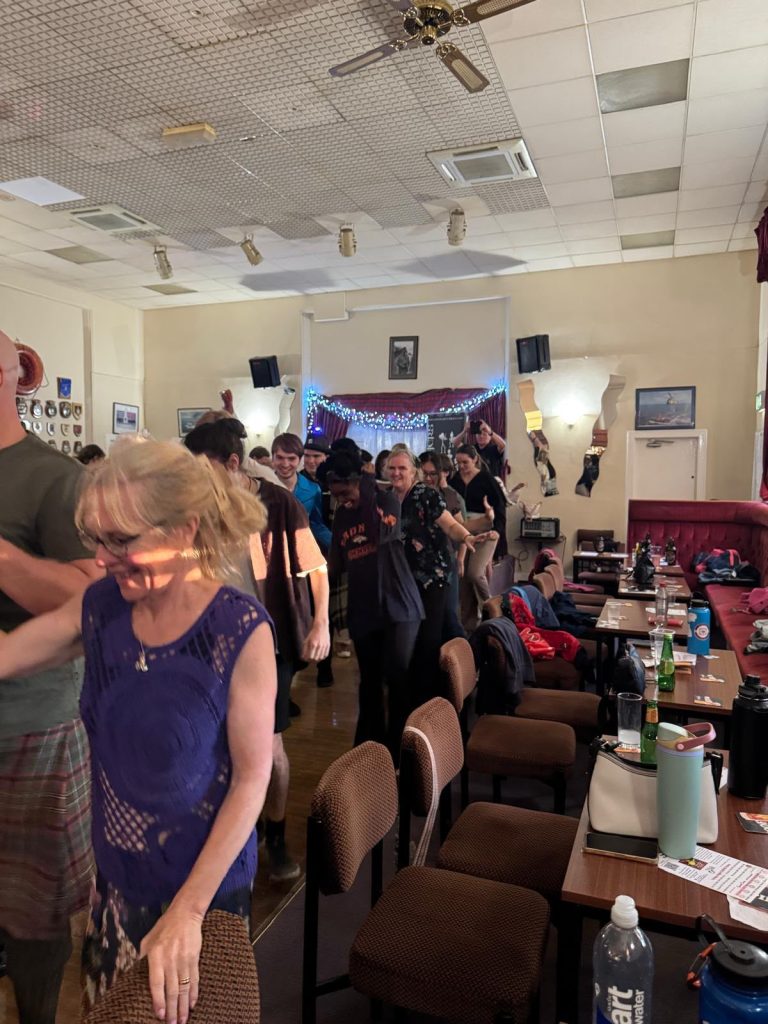
Every Friday in a little corner somewhere in Edinburgh lies a bar and dance hall hidden in plain sight. There, people come to dance all night. Ceilidh dancing, that is, traditional Scottish folk and community dances, often done with a partner or in a group. Our abroad group spent our last night in Edinburgh twirling and stepping until we broke a sweat, and there we met a man by the name of Christopher. Christopher lives in a Scottish town called Lanark, but he’s in Edinburgh every Friday night, and he helped me to know which way to spin and how to remember my left arm from my right. I asked him how he learned all of the dance steps we did, of which there were many (at least 10 different routines they taught us!), and he told me a story of a young Christopher learning to dance at school during gym class. In Scotland, they put together a Christmas performance every December featuring their traditional dance, and according to Cristopher, they taught the steps to you in school so you knew not to be terrible. He expressed how embarrassing it was to put on your gym kit and get ready to dance, boys on one side of the room and girls on the other. Lessons began at the start of December, and they learned a little more every week until Christmas, all at the age of 12 or 13. At large, he has his school to thank for his lack of two left feet, but he also names his mum as his dancing inspiration. Since high school, he remembers dancing with his mother out in pubs or halls just like the one we went to, every Tuesday.
When he’s not on the dance floor, Christopher works as a travel writer, as well as in personal finance, which he says is ‘not as exciting, but you get paid for it.’ His real love lies with creative writing. When I asked him why he does dance, he talked about the joy of the social aspect, making connections with the people on and off the floor, like the conversation I had with him while I was nursing my apple soda and trying to wipe the sweat off my brow. He also does dance just to get himself out of the house and keep fit. He reckons dance is quite a good way to stay healthy.
Ceilidh is the word often used to describe this particular style of traditional dance, but it is also Scottish Gaelic for social gathering or social visit that includes such dancing. As we danced the night away, Christopher gave me the important reminder that for him, this dance has a lot to do with heritage, and that one of the things he loves about it so much is this cultural aspect. He says that heritage can sometimes be good or bad, but nevertheless, it is still your heritage. We should take time to acknowledge who we are, where we come from, and why we do the things we do. Then celebrate! And dance, as we embrace another day.
-
Edinburgh: Church with David
Written by Anna Van Patten
While visiting the beautifully light filled Christian Science church in Edinburgh, I had the opportunity to converse with a lovely member of their board, David by name. Over the years, he has had a loose connection with Principia, including helping them with a geology abroad along the western fault line over fifty years ago which he recalled fondly. Also a proud father and grandfather, he enjoyed sharing some of his family’s accomplishments like his daughter’s work with the Kelpies park in Falkirk. Notably, he shared his deep love for Scotland and Edinburgh in particular. Recalling his childhood in Edinburgh, he shared that his school recently celebrated their 300th anniversary. As a young man, he worked in an Edinburgh steelworks as an engineer. Referring to the changes Edinburgh has experienced during his time, he called his city an “industrial wasteland,” but he continued affectionately, “we survive.” He said that it is “small enough to get around” while still having “all the amenities of the city,” including its lovely parks. I also enjoyed the parks and found Scotland and Edinburgh lovable.
-
Edinburgh: Tibor Eperjessy – Artisan Leather Craftsman
Written by Owen Hofman
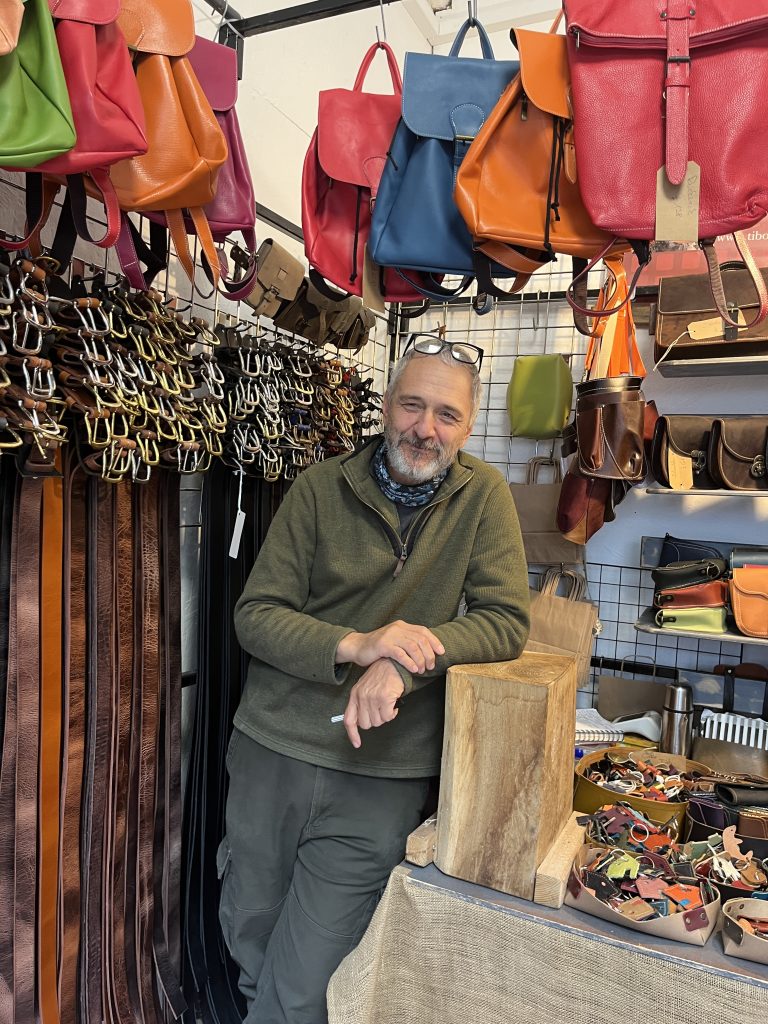
Tibor Eperjessy is a Hungarian leather craftsman. He discovered leatherworking in the 1990s after being inspired by a traditional harness maker at an exhibition in Hungary. Tibor trained for six months under this craftsman before starting his own career. Leatherworking does not require many tools, so with a small investment Tibor could begin crafting. Twenty years later, Tibor relocated his business to the United Kingdom.
Tibor’s leatherworking now sits between art and business. He tries to balance his time between the repetitive work of keeping his store stocked with high-demand items like key fobs and belts, while also staying creatively inspired by making new items like bags and glasses cases.
We joked that you can always tell if an artist is inspired or just waiting. If their shop is clean and they have had time to hoover and dust, it means they are still waiting for inspiration to strike.
-
Edinburgh: Dancing with David
Written by Sophia Green
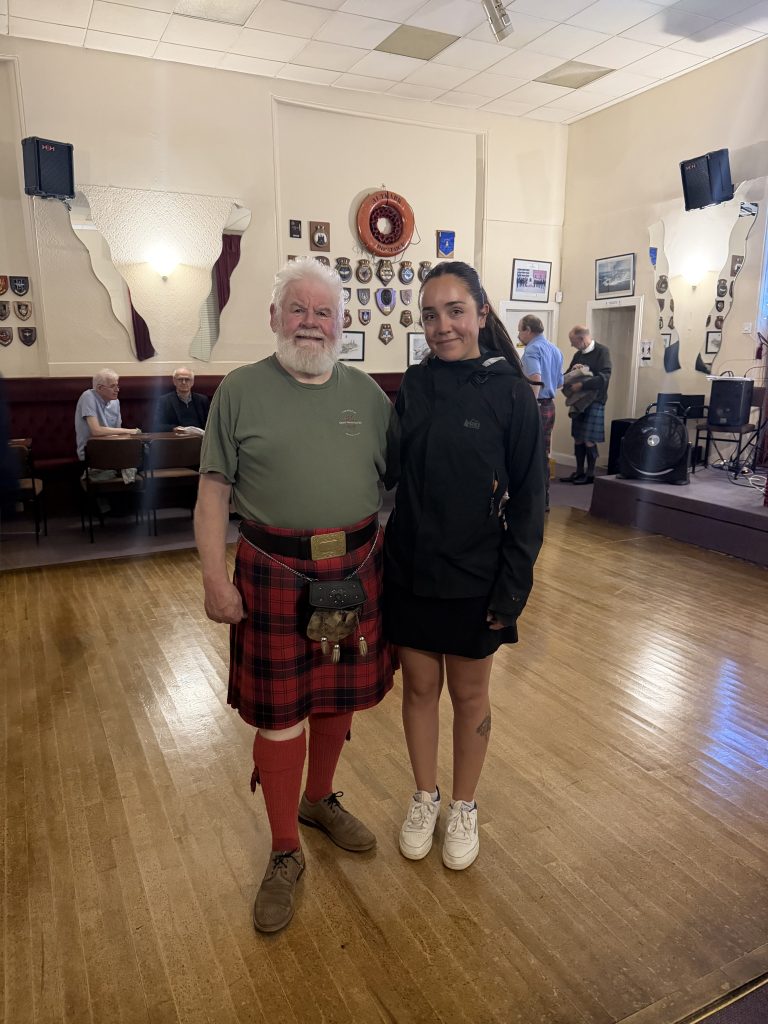
I met David at our night of Ceilidh dancing in Edinburgh. He was in the typical Scottish dress of Kilt, dress sporran, and knee high socks. He joined our group, sat, and engaged in conversation with us. I asked about his involvement with the Ceilidh dancing and also asked him questions about where he was from. As for Ceilidh dancing, he expressed great joy about all the different dances within the style, and broke down some of the movements for us. He had great knowledge of Ceilidh which was understandable after he shared that since moving to Edinburgh over forty years ago, he’d been coming three or more times a week to Ceilidh dance.
As for his background, David shared that he was born in Boston, England, in a small reclusive town of 20,000 people. He is from a family of 5, who grew up, as all their neighbors did, getting around via bike instead of car. Every member in his family somehow ended up with 2 bikes per person, and they knew that they could close the garage when they counted 10 bikes. David studied at Knotting Ham for 3 years, and then Plymouth for his last year of study. Following university, he worked for 3 years before moving to Glasgow for some time before finally settling in Edinburgh 48 or so years ago. During our evening of dance, he paired with many members of our group, and he helped make sure we knew what we were doing enough to have fun Ceilidh dancing!
-
Edinburgh: DJ Vinney

Written by Victoria Gladden
I came across Vinney on the Royal Mile in Edinburgh. He was sitting on one of the structures in the street holding out flyers for his show — The History of Electronic Music. I was intrigued by the carefree way he was just sitting compared to the other street hawkers who shout and shove flyers and playbills into your hands. I approached him and asked him about himself. He told me that he was not from Edinburgh, but from Brighton on the South coast of England. He described his life as semi-retired. He has some business interests, mostly his show that runs for a couple months, that make him some money, but he mostly sits back and lives off his savings from when he ran a printing business in Canada and was a radio DJ. Now, Vinney is a DJ and comedian. His show, that consists of only him and a sampler, has sold out at the Fringe the past two years and he is back for another year!
-
Edinburgh: Comedian Gianmarco Soresi

Written by Arale Mathilda Septiaheny
Gianmarco Soresi is a 38-year-old Italian-American Jewish comedian currently on his Misery Loves tour, flying across the United Kingdom and the United States. Soresi racked up a fanbase of over four million subscribers combined on YouTube, TikTok, and Instagram.
This interview was done at The Edinburgh Fringe after he performed his other set that sold out a month in advance, named “Theatre Adult,” which was a work-in-progress show with the comedian showing off his theatrical background and, at times, inviting audience members to perform musical numbers on stage.
Soresi noted that being at the festival was “chaotic—there’s so much going on, but it’s beautiful [being] surrounded by theatre kids; everyone’s trying to make something cool.”
He then gave us a glimpse of what happens behind the curtains, stating, “Backstage everyone is like…a battle. We’re like getting ready—we’re tired—but we gotta go on. So it’s a nice camaraderie.”
As stated, Soresi’s set is a work-in-progress, which became a “challenge to navigate” combined with the already chaotic, busy nature of the Fringe. “You have to push yourself every show to try new things knowing that it won’t all work,” he said. “Sometimes as a comic you become so addicted to ‘that worked, that worked, that worked,’ so why would I deviate?”
With that in mind, the comedian said the Fringe “is the place to do it. So it’s just like pushing yourself to remember that.”
Soresi noted that his other show, Misery Loves, is “just his stand-up,” where he will “mix some of [the] old stuff and new stuff ’cause I know how to handle that. I’ve been doing this for so long.”
He then made a comparison of the two sets. “[Misery Loves] has more of a narrative, so like trying new things feels riskier. ‘Can I be vulnerable here?’ So that’s what’s cool.”
The comedian will end his 2026 touring run by December 31st in West Palm Beach, Florida.
-
Stirling: Catherine King
Written by Cole Christensen
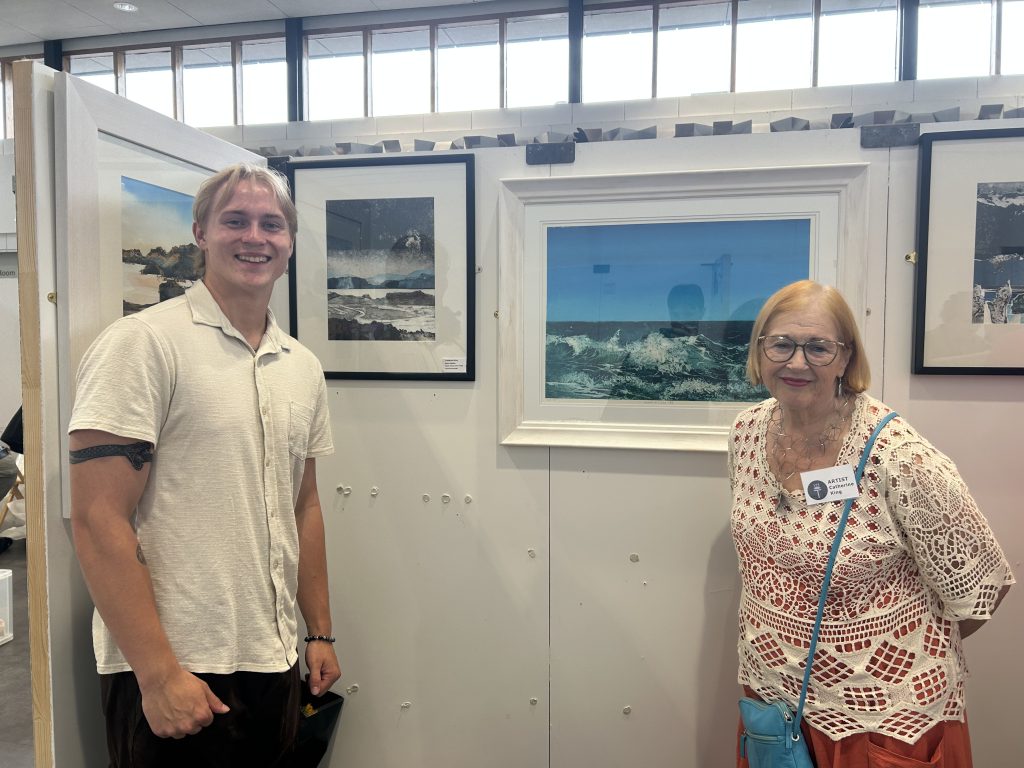
I interviewed an artist at the Print Festival at Stirling University named Catherine King. She was there with her husband, who was packing up while we were talking. She told me she had been doing art and workshops for several decades, and it was her 3rd time attending that festival. She mentioned that whenever she does her art, it’s never an idea or concept that someone else prompted her to do, and it’s always things she wants to create herself. She loves her family and her adult kids as they were brought up many times throughout our interview including her telling me that she wasn’t going to attend the festival next year as she was going to go on vacation with her family.
-
Stirling: Isabel and Linda at The Church of the Holy Rude
Written by Samantha Goodrich
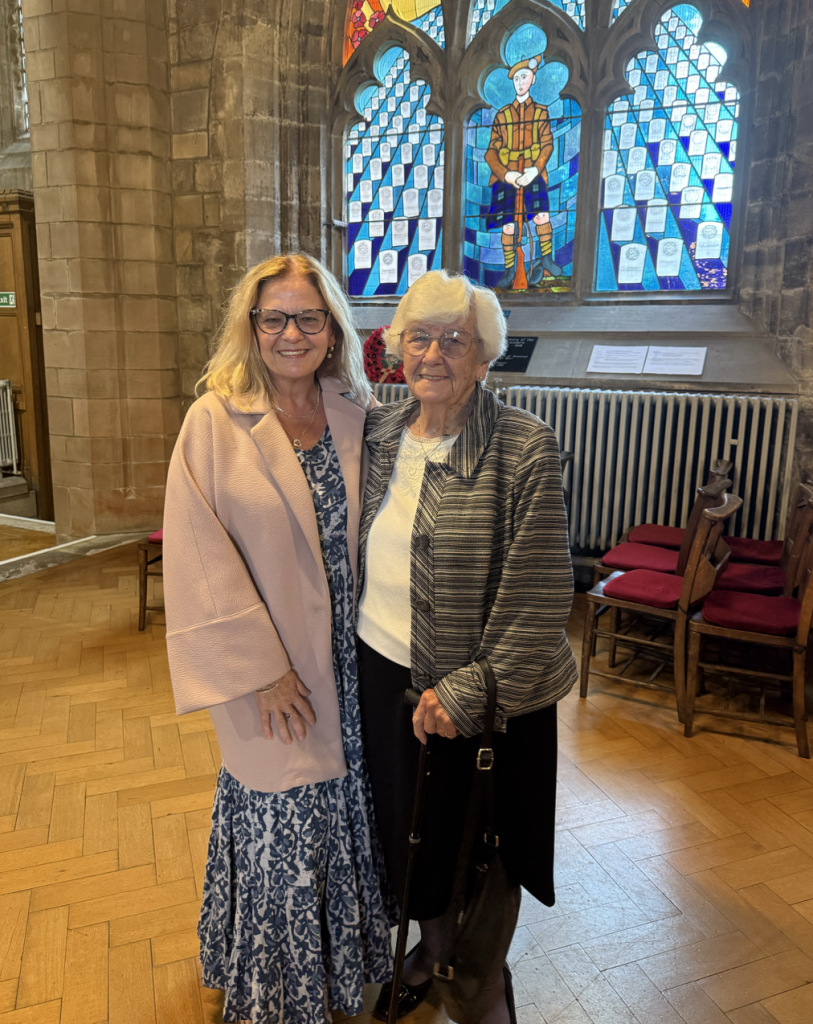
This is a mother and daughter who have called Stirling Scotland their home for their entire lives. I had the opportunity to meet them at the Church of the Holy Rude following the Sunday service, a place that holds a special meaning for them and their family. Isabel was christened in this same church 90 years ago and now she and Linda continue to attend church together every Sunday.
They both love to travel (especially to Greece) but no matter where they go “something always seems to bring them back to Stirling.” When I asked why, Isabel explained that part of that connection is just outside her living room window. Her home looks out toward the Wallace Monument, and she told me how much she enjoys watching the tourists come to experience the place she has always known as home. For Isabel and Linda, Stirling is a place filled with family, faith and memories.
-
Stirling: Bus Driver Brian

Written by by Nekoda Burnett
Our travel up into the Highlands, and a visit to the Kelpies, and our next destination (Edinburgh) was on a coach driven by a fun-loving Scot named Brian. Brian was born and raised in Stirling, Scotland, where Stirling Castle was his “playhouse.” After driving buses for 30 years, Brian says he wishes he had known more about his country’s history so he could narrate the drive for tourists. “I’ve been studying up on more. Used to, people would just get on and I would drop them off.”
Americans are Brian’s favorite group of tourists because they are “friendly and talkative.” Brian says his German tourists are the least fun. “They complain about the driving, but don’t understand that a 30-minute drive could easily be more like 45 with all the stopping and other traffic.”
Outside of work, Brian enjoys walking his red labrador, watching YouTube, and visiting old churches. Most importantly, Brian enjoys “taking people about,” which is a very crucial part of his job. We thank Brian for his quick wit and fun facts throughout our journey from Stirling to Edinburgh.